Speech is one of the most exciting milestones of early childhood. But when a child isn’t speaking as expected, parents naturally begin to worry. The good news? Early and consistent action at home can make a big difference in your child’s communication development.
At Samvedan Child Development Center, recognised as the Best Child Development Center in Gujarat, we work closely with children who face speech delays due to developmental delays, autism, hearing issues, attention difficulties, or other underlying conditions. Along with professional support, what you do at home matters just as much.
Below are 10 actionable, easy-to-follow strategies that parents can start using today.
1. Reduce Screen Time — Increase Real Interaction
Screens limit language development because they don’t give children a chance to respond, imitate, or express.
What parents can do:
- No mobile/tablet during meals
- No YouTube or cartoons for long hours
- Replace screen time with real playtime, talking, and reading
You’ll notice your child’s attention, curiosity, and communication improve when screen time goes down.
2. Talk Slowly, Clearly, and Frequently
Children learn language by listening to real conversations around them.
Instead of giving short commands like “Eat!”, try expanding your sentences:
➡️ “Let’s eat the yummy roti.”
➡️ “See the big car outside?”
Your child absorbs vocabulary even if they don’t speak yet.
3. Encourage Imitation Through Simple Games
Imitation is the foundation of speech.
Try activities like:
- Clapping
- Peek-a-boo
- Making animal sounds (“Moo”, “Baa”, “Meow”)
- Blowing bubbles
- Copying facial expressions
These build the motor and cognitive skills required for speech.
4. Name Everything During Daily Routine
Turn everyday moments into language-learning opportunities.
Examples:
- “This is your cup.”
- “Mama is cutting apple.”
- “We are wearing shoes.”
Repetition helps children make connections between objects, actions, and words.
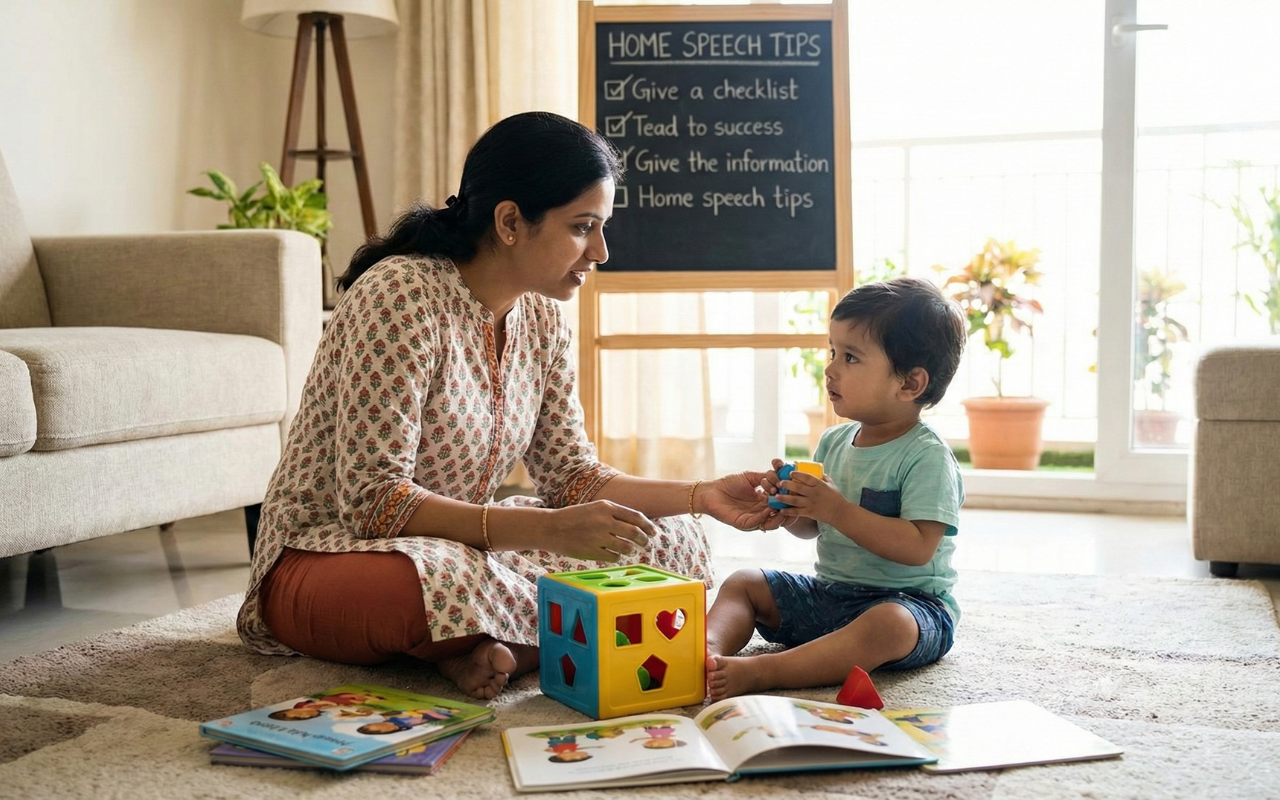
5. Read Picture Books Every Day
Reading boosts vocabulary, imagination, attention span, and speech.
Choose books with:
- Large pictures
- Simple words
- Repetitive lines
- Animal and vehicle themes
While reading, pause and let the child point, touch, or try saying the word.
6. Avoid Finishing Their Sentences
If your child tries to say something, give them time.
Don’t rush to complete the sentence for them.
This builds confidence and encourages them to communicate independently.
Tip: Maintain eye contact and respond warmly.
7. Use Simple “One-Word” Prompts First
Start with easy words like:
- “Ball”
- “Water”
- “Mama”
- “Car”
- “Open”
- “Give”
Once they start speaking single words, gradually move to two-word combinations like:
➡️ “More water.”
➡️ “Red car”
8. Create Opportunities for the Child to Request
Don’t give everything automatically.
Make the child ask, point, or signal before giving the item.
Examples:
- Keep snacks slightly out of reach
- Close the lid of a toy box and wait
- Hold the water bottle until they show interest
This encourages communication attempts.
9. Encourage Social Play, Not Just Solo Play
Children learn speech through interaction, not silence.
Play activities such as:
- Group games
- Pretend shopping
- Kitchen role-play
- Building blocks together
- Outdoor play with neighborhood kids
The more they interact, the more they speak.
10. Seek Early Evaluation — Don’t “Wait and Watch”
Many parents believe children will “talk in their own time”, but this delay can cause bigger concerns later.
If your child:
- Is not speaking by age 2
- Speaks only a few words
- Does not respond to name
- Avoids eye contact
- Has unclear speech after age 3
- Shows signs of developmental delay
A timely assessment is extremely important.
Early support from experts creates the strongest foundation for language development.
Why Choose Samvedan Child Development Center?
Samvedan is widely trusted as the Best Child Development Center in Gujarat because of its specialized team, early intervention expertise, and child-friendly approach. The center offers:
- Pediatric Neurology (Dr. Purva Shah)
- Speech & Language Therapy
- Occupational Therapy
- Early Intervention
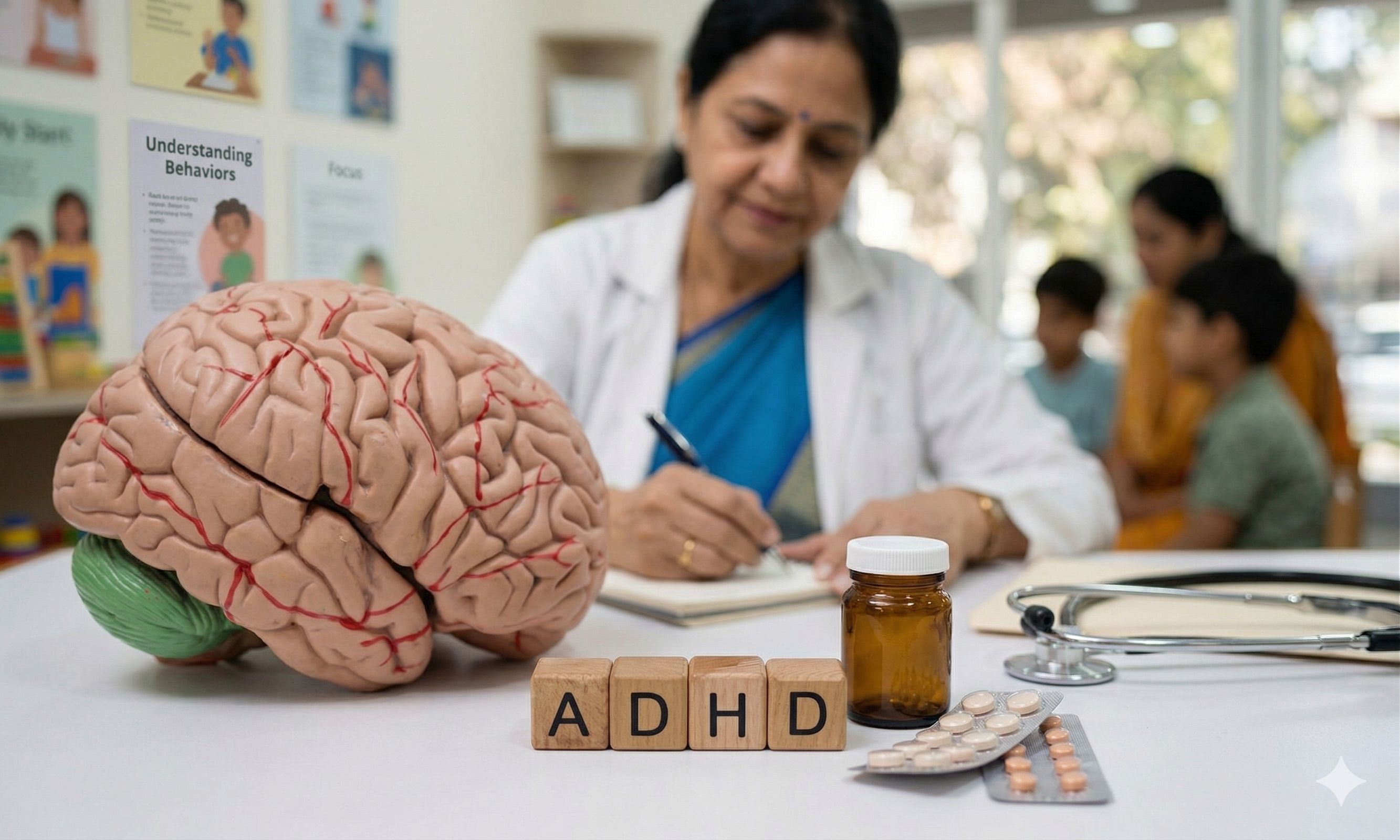
- Autism & ADHD Support
- Parent Training Programs
- Learning Disability Management
- Comprehensive Developmental Assessments
Every child receives personalized care, and parents are guided step-by-step to support progress at home.
Final Thoughts
Speech delay is not a problem to fear—but a signal to act early.
With the right home environment and professional support, children make remarkable improvements.
If your child is not speaking, remember:
Early intervention works. Your involvement works even more.